TIA — This is Africa. Sometimes abbreviated TIFA. Our power has been spotty and our internet has been slow, so it has taken some time to get our Thanksgiving post together. But, in honor of my favorite holiday (a whole day focused on family, friends, and food), here it is:
We are thankful for all of the awkward restaurant experiences in China, for the chance to see the Great Wall, and for all of the delicious food and the buzzing culture of Vietnam. We are thankful for getting to see mountain gorillas, paddle boarding on the Nile, watching a leopard drag its kill up a tree, and getting to see the Great Pyramids of Giza. We are grateful for friends who have hosted us in their apartments, taught us about soldier stew, invited us over for a harvest festival dinner, joined us for parts of our journey, and showed us around their new homes in new countries. We are thankful for the amazing people we met on the roads of Africa and who joined us for a not-so-traditional Thanksgiving dinner at a pizzeria on Zanzibar. And we are thankful for our family and friends back home who have promised us some turkey and mashed potatoes in early 2015.
The streets of Vietnam buzz with motorbikes.
Our students in Vietnam.
A mama gorilla with a baby on her back (baby not shown).
One of the evenings we were in Zanzibar, we walked over to a neighboring resort that was hosting a local jam night. After dinner, drinks, and a few dances, we walked back through the village towards our hotel. As we arrived at the hotel, we discovered that the driveway was filled with sleeping goats. (It would be a driveway, anyway, if it was paved and located directly in front of the hotel.)
Me: Why are all of the goats sleeping here?
Masai night guard: Because it is night time and sometimes goats get tired.
Me: No, I understand why they are sleeping…but why are they all sleeping here?
Guard: Well, sometimes when people come into town for the music, the houses fill up and so the goats don’t have their rooms anymore.
Fair enough.
Tired goats that have been kicked out of their houses.
And after only four days of pretty continuous fantasies about cheese and sparkling wine…
Zanzibar rewarded us with this. Well played, Stone Town, well played.
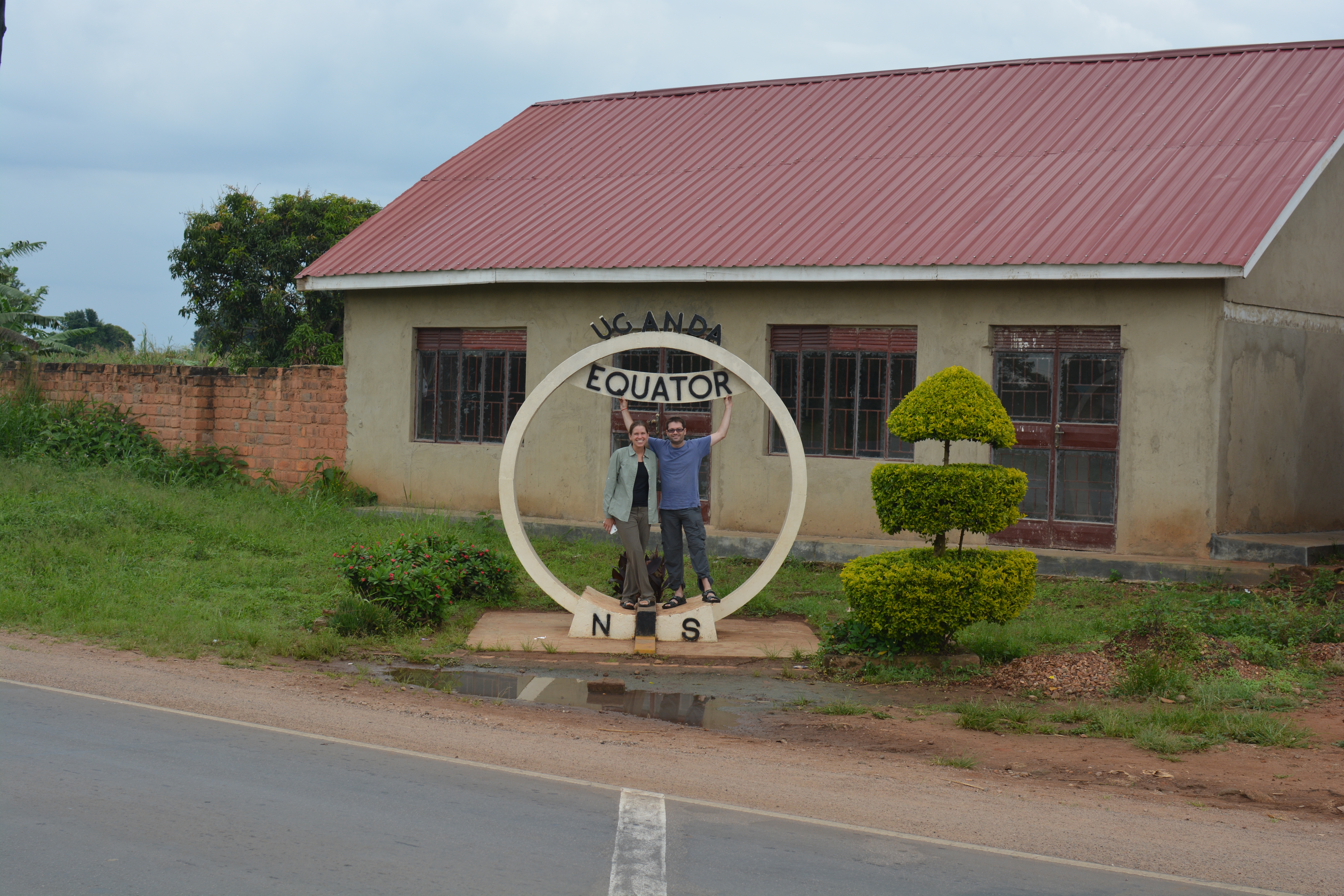
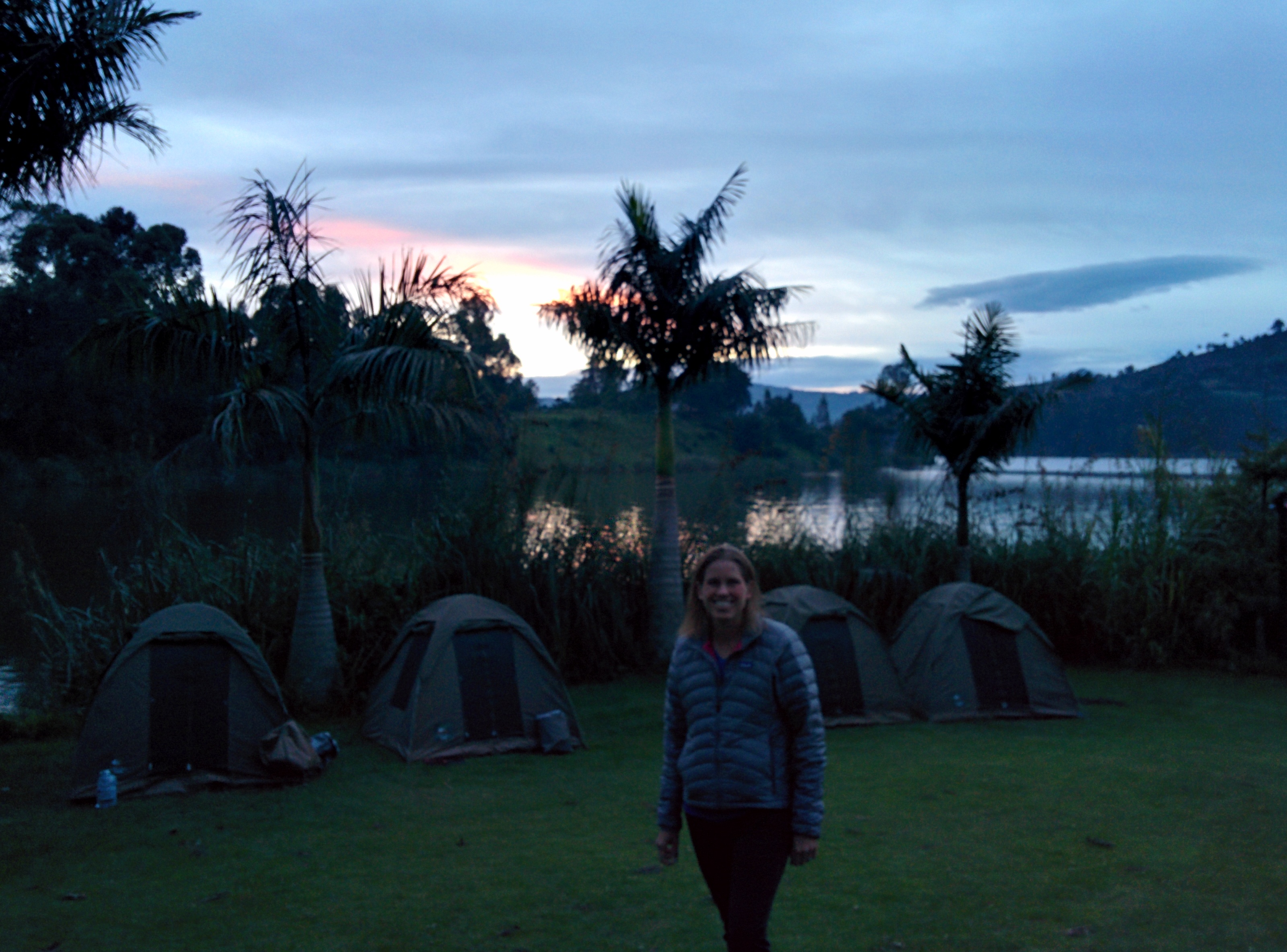
Over the course of four days we rode across most of Kenya and Uganda in an overland truck (it’s a truck, not a f***ing bus), crossing the equator a couple of times, and camping along the way. We advanced from standard users to advanced users of squat toilets. I got safari ants up my pants all the way to my crotch, so that when they started biting, I had to actually drop trou in the middle of the trail and in front of our African guide and half of my truck crew, while Dan and I both worked to peel them off. (Travel tip: ALWAYS tuck your pants into your socks in the bush, plus, it’s a super cool look.) And all we got were these awesome pictures.
Sunrise the morning of our gorilla tracking.
Silverback
What we actually saw when we looked out.
Momma gorilla with a baby on her back
A mama gorilla with a baby on her back (baby not shown).
Panorama from the gorilla walk.
We tracked wild gorillas through the Ugandan mountains. There are only 600 mountain gorillas remaining in the wild, roughly split between Uganda and Rwanda. Of the roughly 300 gorillas in Uganda, approximately 100 are habituated to humans — that is, to fund conservation efforts, they tolerate humans taking pictures of them for about an hour each day. The trick, of course, is that the trackers just track gorillas, using GPS to find the approximate location of the habituated groups, but if the groups cross paths, they cannot be sure whether they are tracking the habituated groups or wild families. Our trackers found truly wild mountain gorillas, and then brought us along to track them, through the “deep bush” (i.e. you need a porter in front of you cutting away the forest, helping you find your footing, and grunting in order to stop the wild silverback from charging you) for three hours. Our total hike time was about 7 hours — so it took us about two hours each way to get to where we left the trail. But we did get to see truly wild mountain gorillas — the silverback protected the females and their babies (often giving our trackers and porters a bit of a scare and causing us to nearly need a change of underwear), and the females carried their babies on their backs, running away from us large, machete-wielding, picture-taking, fellow primates. After three hours in the bush, and getting a few, half-decent shots, we were — as several of our truckmates might say — completely knackered. So we went back to our bags for some much needed lunch and water (we had left all our provisions behind when we thought we were just five minutes away from an habituated group.) While sitting on the side of the trail, stuffing our faces, one of the guys in our group stood up, looks back on the trail and says, “There are three gorillas right there. I shit you not.” A mom and a three-year-old and a baby from the habituated group made a brief appearance right on our trail, due, likely, to the famous curiosity of said three-year-old, and the fact that the habituated group hadn’t had their daily visit.
More pictures from our gorilla tracking adventure:
Lookin’ super cool.
Porters tracking gorillas.
crawling through the deep bush.
Erin thinking, “we are really in the deep bush.”
There is a gorilla in the background of this picture, I swear.
In preparation for our gorilla trek, we spent a morning tracking chimpanzees through Kalinzu Forest Reserve. We found a wild group way up in the canopy that did not care one way or the other about us looking up at them from below. They cared so little, in fact, that one of the males took the opportunity to copulate with a female having her estrus for the third time. (You can tell a female is in heat by her swollen rear end. They go into heat frequently — often twice a month — until they get pregnant.) The reason that the non-dominant male was able to copulate with the female was that the females often don’t get pregnant until their fourth or so estrus, which is when the dominant male begins to be protective of their copulation.
Looking up at the chimps.
Chimp!
A few more pictures from our African overland adventure so far:
Sunset in Nairobi.
Our truck.
Erin on a bus, I mean truck, after eight hours.Great Rift Valley
Buying fresh veg for dinner on the side of the road.The Equator.
So far, our exorbitantly-priced “official” taxi ran out of gas in the rush-hour-packed streets of Nairobi on the way to the hotel from the airport. (So, we waited anxiously in a cab with all our belongings while being assured that God is Great and that all these people are Christians and that no one will touch us, but just to help God out, we were locked into the vehicle with all the windows rolled up while our taxi driver worked with a motorcyclist to get us some gas.) And a man on the streets (which are actually packed with incredibly friendly people who have offered us help and directions and even walked us all the way to the restaurant we were looking for) asked Dan if Dan would give me to him. (Dan’s first thought was, “she’s not mine to give,” and his second thought was that given my expensive tastes, Dan didn’t have enough cattle to actually make that trade.) And all we’ve gotten are these awesome pictures.
The elephants are from the Sheldrick Trust Orphans Project, which takes care of elephants orphaned due to poaching, starvation, or other “human-wildlife conflict.” The elephants are taken care of at the orphanage for about three years before beginning a 5-10 year process of being re-introduced to the wild through making friends with wild elephants. The folks at the orphanage told us that female graduates of the program often return to show off their wild-born babies to the folks working to reintroduce new elephants into the natural parks — elephants really do never forget. The giraffes are from the Giraffe Center, where 9 giraffes (2 males and 7 females) are part of a breeding program to increase the numbers of this endangered subspecies of giraffe. Before today, my favorite giraffe fact was that giraffe babies fall at least four feet to the ground when they are born. Today, that fact was enhanced by new knowledge that giraffes can actually sit down (though they generally must keep their head elevated to regulate their blood pressure), but they just don’t sit while they are giving birth, and that they have a 15-month gestation period.
Tomorrow is day one of our 24-day participatory camping safari, which will be spent in Nairobi, and then the “real” adventure begins, taking us through Uganda and Tanzania.
After a small hiccup with airport security involving Erin’s favorite sunscreen we had a lovely flight to Thailand.
We ended up moving a few things around between our international flight and domestic flight. During that reorganization, we accidentally put the bag of sunscreen in our carry on. After we had checked bags we went through security and they said one bottle of sunscreen was over the size limit.
This was Erin’s favorite which she had just received as a resupply from her awesome mother a few days prior. Erin was arguing to keep it and trying to pour it into ridiculously small openings of other sunscreen bottles. Dan stood by trying to not argue knowing he had about 4 other too large to travel sunscreens they hadn’t found tucked away in his carry on. After failing to convince them to let us through, Erin took the bottle and said meet you at the gate and left security with her bottle in frustration headed back to the check in counter. I went to our gate to wait, and eventually heard this story.
Back at the check in counter Erin tried to check the bottle…
Desk: Mam you cant check a bottle
Erin: (puts it in a zip lock bag) can I check this bag?
Desk: no no, a real bag
Erin: puts zip lock back inside larger black plastic bag
Desk: no no, you need luggage or box
Erin: (walks to nearby airport book store, please do you have any boxes around) Can I check this double bagged box with sunscreen
Desk: OK thank you
Lesson is, always check your sunscreen and never upset my wife 😉
We celebrate joy to the fishes of the deep blue sea
Dan follows the leader Erin
We swim with the fishes
We got some scuba diving in during our Thailand visit. We are diving on the island of Ko Samui, which has been lovely. We chose to dive with Discovery Dive Center. It included “free” photos with your diving… IE you get photos for free but they aren’t the cheapest dive operators on the island, not that I ever look for “cheapest” when diving 😉
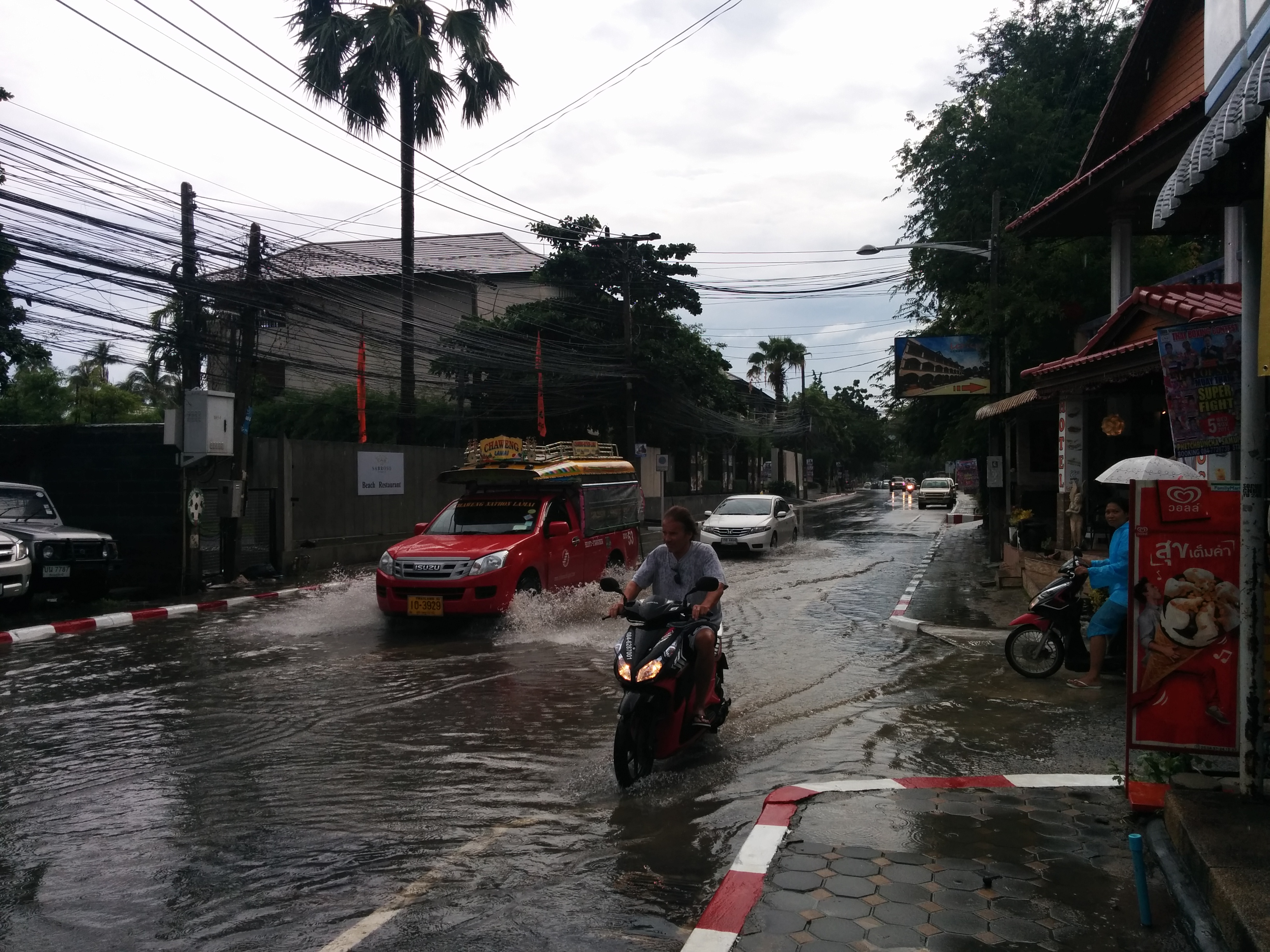
The water was pretty dang warm, but visibility doesn’t match Caribbean / Mexico. The reef and fish are in much better shape though, which is nice. Hadn’t seen schools of fish this large for a long time. Saw a school so large and dense that for about 30 seconds I thought a whale shark was coming into view, but it just turned out to be a massive school of fish coming in from the distance. Sadly, no whale sharks on our dives. Can’t complain we beat the bad weather (monsoon) to the best dive site on these small islands.







 Adventures of the Miller Mayers