Category Archives: Cities and Sites

Kenya and Uganda Overland, Days 1 – 6

Over the course of four days we rode across most of Kenya and Uganda in an overland truck (it’s a truck, not a f***ing bus), crossing the equator a couple of times, and camping along the way. We advanced from standard users to advanced users of squat toilets. I got safari ants up my pants all the way to my crotch, so that when they started biting, I had to actually drop trou in the middle of the trail and in front of our African guide and half of my truck crew, while Dan and I both worked to peel them off. (Travel tip: ALWAYS tuck your pants into your socks in the bush, plus, it’s a super cool look.) And all we got were these awesome pictures.

We tracked wild gorillas through the Ugandan mountains. There are only 600 mountain gorillas remaining in the wild, roughly split between Uganda and Rwanda. Of the roughly 300 gorillas in Uganda, approximately 100 are habituated to humans — that is, to fund conservation efforts, they tolerate humans taking pictures of them for about an hour each day. The trick, of course, is that the trackers just track gorillas, using GPS to find the approximate location of the habituated groups, but if the groups cross paths, they cannot be sure whether they are tracking the habituated groups or wild families. Our trackers found truly wild mountain gorillas, and then brought us along to track them, through the “deep bush” (i.e. you need a porter in front of you cutting away the forest, helping you find your footing, and grunting in order to stop the wild silverback from charging you) for three hours. Our total hike time was about 7 hours — so it took us about two hours each way to get to where we left the trail. But we did get to see truly wild mountain gorillas — the silverback protected the females and their babies (often giving our trackers and porters a bit of a scare and causing us to nearly need a change of underwear), and the females carried their babies on their backs, running away from us large, machete-wielding, picture-taking, fellow primates. After three hours in the bush, and getting a few, half-decent shots, we were — as several of our truckmates might say — completely knackered. So we went back to our bags for some much needed lunch and water (we had left all our provisions behind when we thought we were just five minutes away from an habituated group.) While sitting on the side of the trail, stuffing our faces, one of the guys in our group stood up, looks back on the trail and says, “There are three gorillas right there. I shit you not.” A mom and a three-year-old and a baby from the habituated group made a brief appearance right on our trail, due, likely, to the famous curiosity of said three-year-old, and the fact that the habituated group hadn’t had their daily visit.
More pictures from our gorilla tracking adventure:
In preparation for our gorilla trek, we spent a morning tracking chimpanzees through Kalinzu Forest Reserve. We found a wild group way up in the canopy that did not care one way or the other about us looking up at them from below. They cared so little, in fact, that one of the males took the opportunity to copulate with a female having her estrus for the third time. (You can tell a female is in heat by her swollen rear end. They go into heat frequently — often twice a month — until they get pregnant.) The reason that the non-dominant male was able to copulate with the female was that the females often don’t get pregnant until their fourth or so estrus, which is when the dominant male begins to be protective of their copulation.
A few more pictures from our African overland adventure so far:
Sunset in Nairobi.
Sunset in Nairobi.
Our truck.
Our truck.
Erin on the bus, I mean truck, after eight hours.
Erin on a bus, I mean truck, after eight hours.
Rift Valley.
Great Rift Valley
Buying fresh veg for dinner on the side of the road.
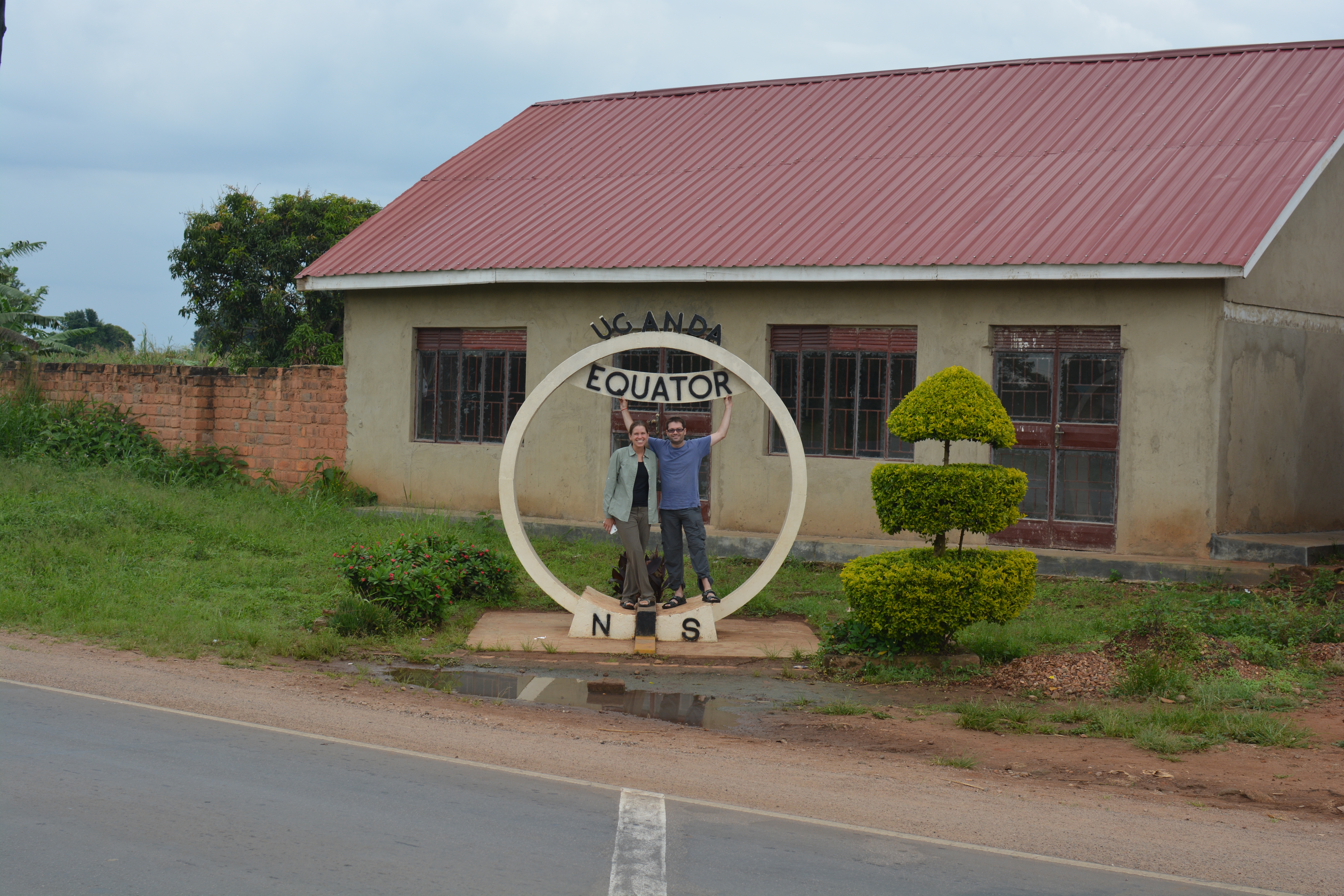
Equator.
The Equator.
wpid-img_20141110_084158.jpg
The Equator.
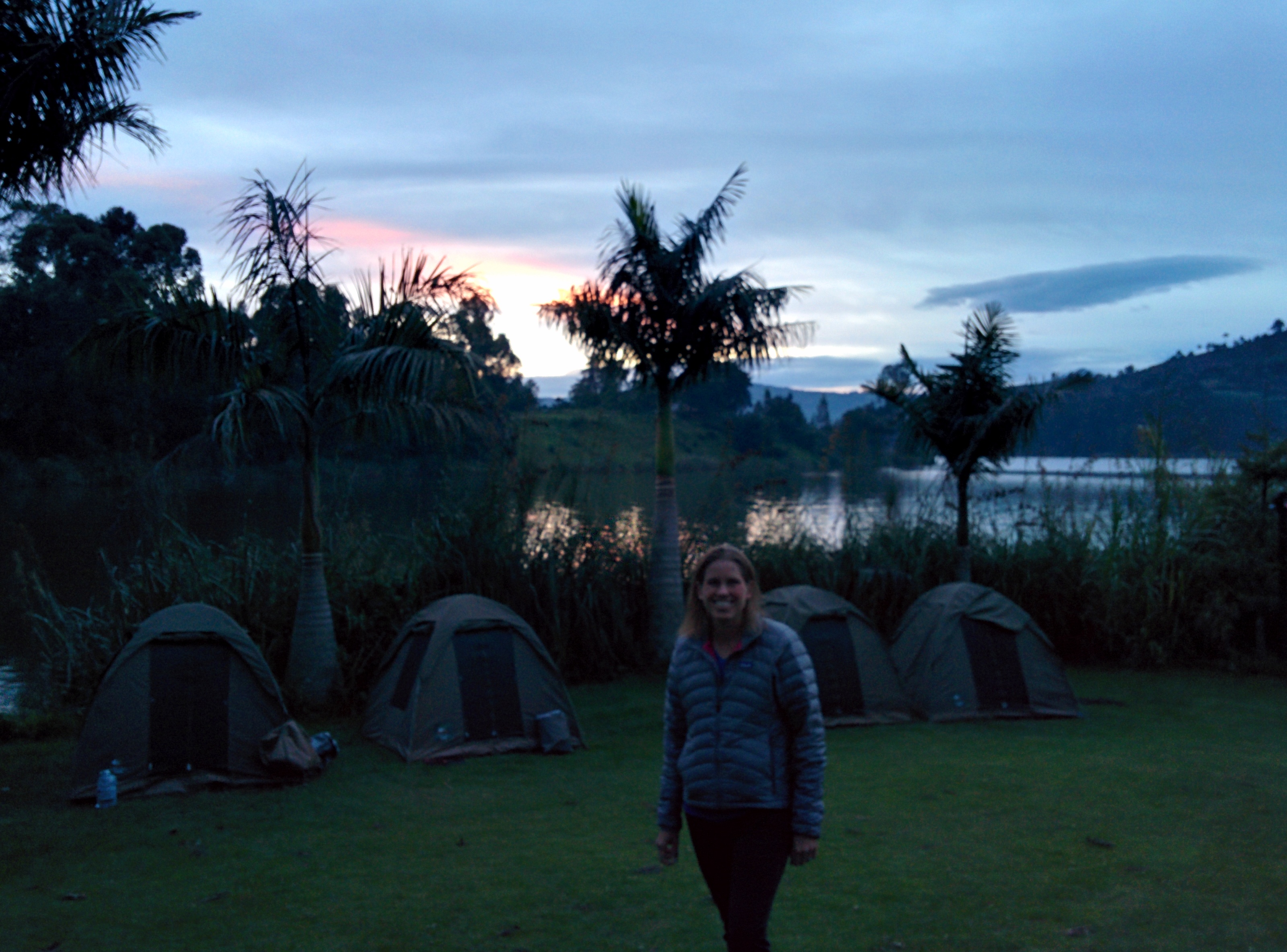
Campsite in Uganda.
Campsite in Uganda.
Campsite in Uganda
Campsite in Uganda.

We’re in Africa

Nairobi, Kenya.

So far, our exorbitantly-priced “official” taxi ran out of gas in the rush-hour-packed streets of Nairobi on the way to the hotel from the airport. (So, we waited anxiously in a cab with all our belongings while being assured that God is Great and that all these people are Christians and that no one will touch us, but just to help God out, we were locked into the vehicle with all the windows rolled up while our taxi driver worked with a motorcyclist to get us some gas.) And a man on the streets (which are actually packed with incredibly friendly people who have offered us help and directions and even walked us all the way to the restaurant we were looking for) asked Dan if Dan would give me to him. (Dan’s first thought was, “she’s not mine to give,” and his second thought was that given my expensive tastes, Dan didn’t have enough cattle to actually make that trade.) And all we’ve gotten are these awesome pictures.

The elephants are from the Sheldrick Trust Orphans Project, which takes care of elephants orphaned due to poaching, starvation, or other “human-wildlife conflict.” The elephants are taken care of at the orphanage for about three years before beginning a 5-10 year process of being re-introduced to the wild through making friends with wild elephants. The folks at the orphanage told us that female graduates of the program often return to show off their wild-born babies to the folks working to reintroduce new elephants into the natural parks — elephants really do never forget. The giraffes are from the Giraffe Center, where 9 giraffes (2 males and 7 females) are part of a breeding program to increase the numbers of this endangered subspecies of giraffe. Before today, my favorite giraffe fact was that giraffe babies fall at least four feet to the ground when they are born. Today, that fact was enhanced by new knowledge that giraffes can actually sit down (though they generally must keep their head elevated to regulate their blood pressure), but they just don’t sit while they are giving birth, and that they have a 15-month gestation period.

Tomorrow is day one of our 24-day participatory camping safari, which will be spent in Nairobi, and then the “real” adventure begins, taking us through Uganda and Tanzania.

Diving in Koh Samui

We got some scuba diving in during our Thailand visit. We are diving on the island of Ko Samui, which has been lovely. We chose to dive with Discovery Dive Center. It included “free” photos with your diving… IE you get photos for free but they aren’t the cheapest dive operators on the island, not that I ever look for “cheapest” when diving 😉

The water was pretty dang warm, but visibility doesn’t match Caribbean / Mexico. The reef and fish are in much better shape though, which is nice. Hadn’t seen schools of fish this large for a long time.  Saw a school so large and dense that for about 30 seconds I thought a whale shark was coming into view, but it just turned out to be a massive school of fish coming in from the distance. Sadly, no whale sharks on our dives. Can’t complain we beat the bad weather (monsoon) to the best dive site on these small islands.


A quick taste of Malacca

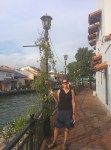
Our last stop in Malaysia was Malacca, so we could see something outside of the big city. We had delicious food for next to nothing, and learned some history. The port at Malacca was so important to early trade that it was considered the capital of the world. It lead to some of the first maritime laws, harbor masters, and usages of multiple currencies. The strait of Malacca, now often called the strait of Malaysia, still sees 120,000 ships pass by. No ships really doc with Malacca anymore as Penang and Singapore have long since surpassed this old port town. Now the river leading to the ocean has tour boats and is surrounded by lovely restaurants for tourists, both local and foreign alike.

The Malacca church needs to be straightened out a bit (picture doesn’t show it too well, but it is like the leaning tower of Pisa).

wpid-img_20141023_172852.jpg

The once famous river that had the largest market in the world, now home of cute cafes, and good Indian food.

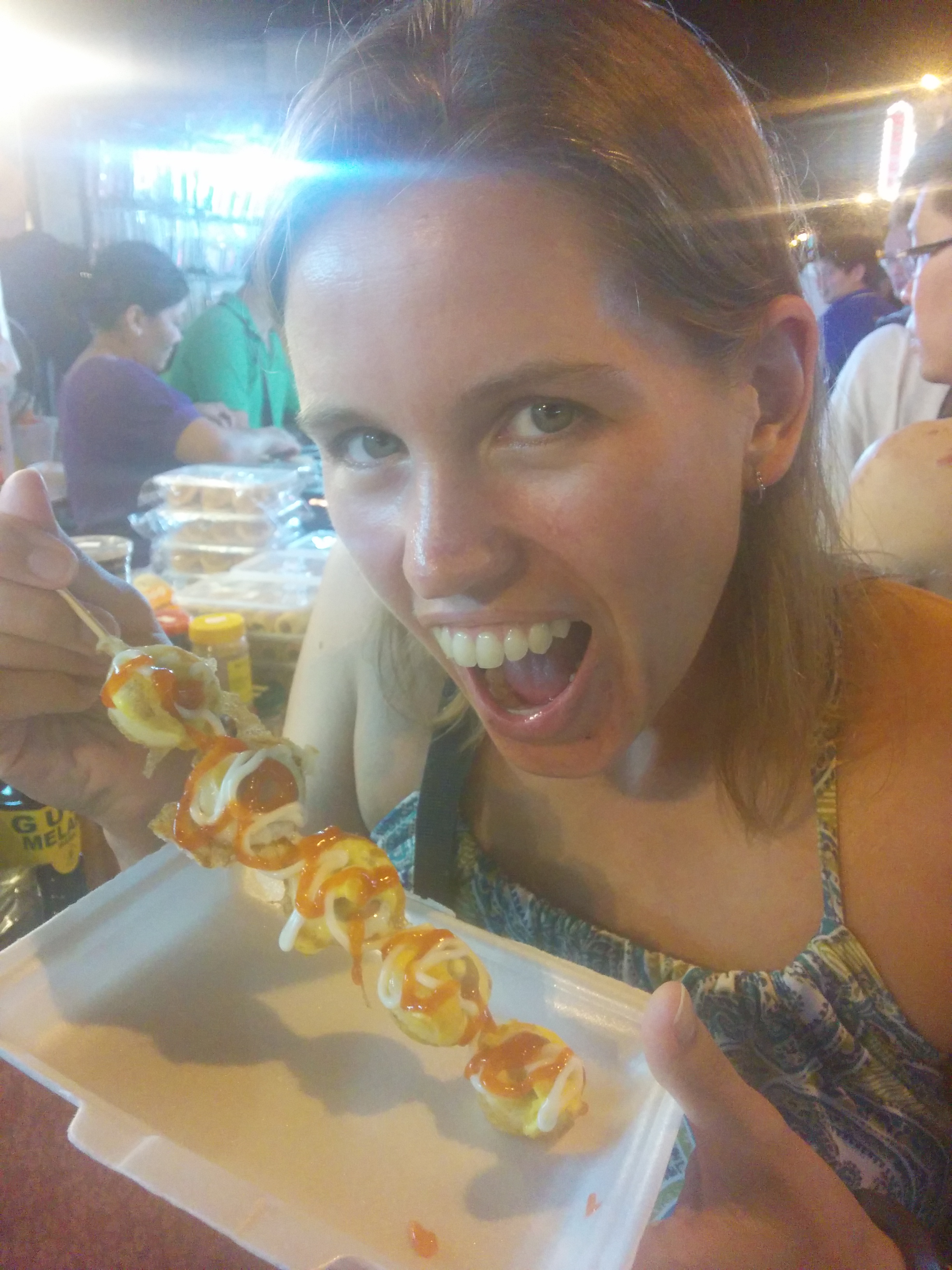
Erin tries a mystery egg and sausage stick, got to eat something odd at the night market. The melting honey pastries were the best.

wpid-img_20141024_220113.jpg

The most delicious food in Malacca, red pork noodles… The locals wait in lines for over an hour to eat these $1.50 noodles… apparently no one has thought to just raise the price 😉

wpid-img_20141024_233243.jpg

Food is very popular here both locals and tourists line up for hours at the favorite spots. Both the famous chicken rice balls and city satay had over hour long waits… Sadly neither of those was worth the wait, but the red pork noodles mentioned above was easily worth the wait. Duck noodles below had no wait at all and were pretty outstanding as well.

We’re on a Roof in Malaysia

On a helipad converted into a bar, to be precise.

As a side note, there is something awesome about a place where the evening Azan (Islamic call to prayer) is immediately followed by fireworks in celebration of the Hindu Autumn Festival of Deepvali.

We also explored the Batu caves.

And, yes, while I was taking these pictures I did feel just like the tourists who visit DC and then ask me for their help getting their picture with the squirrels, but just as those tourists maintain that squirrels are cute, I say that so are these monkeys.

Kampot, Cambodia

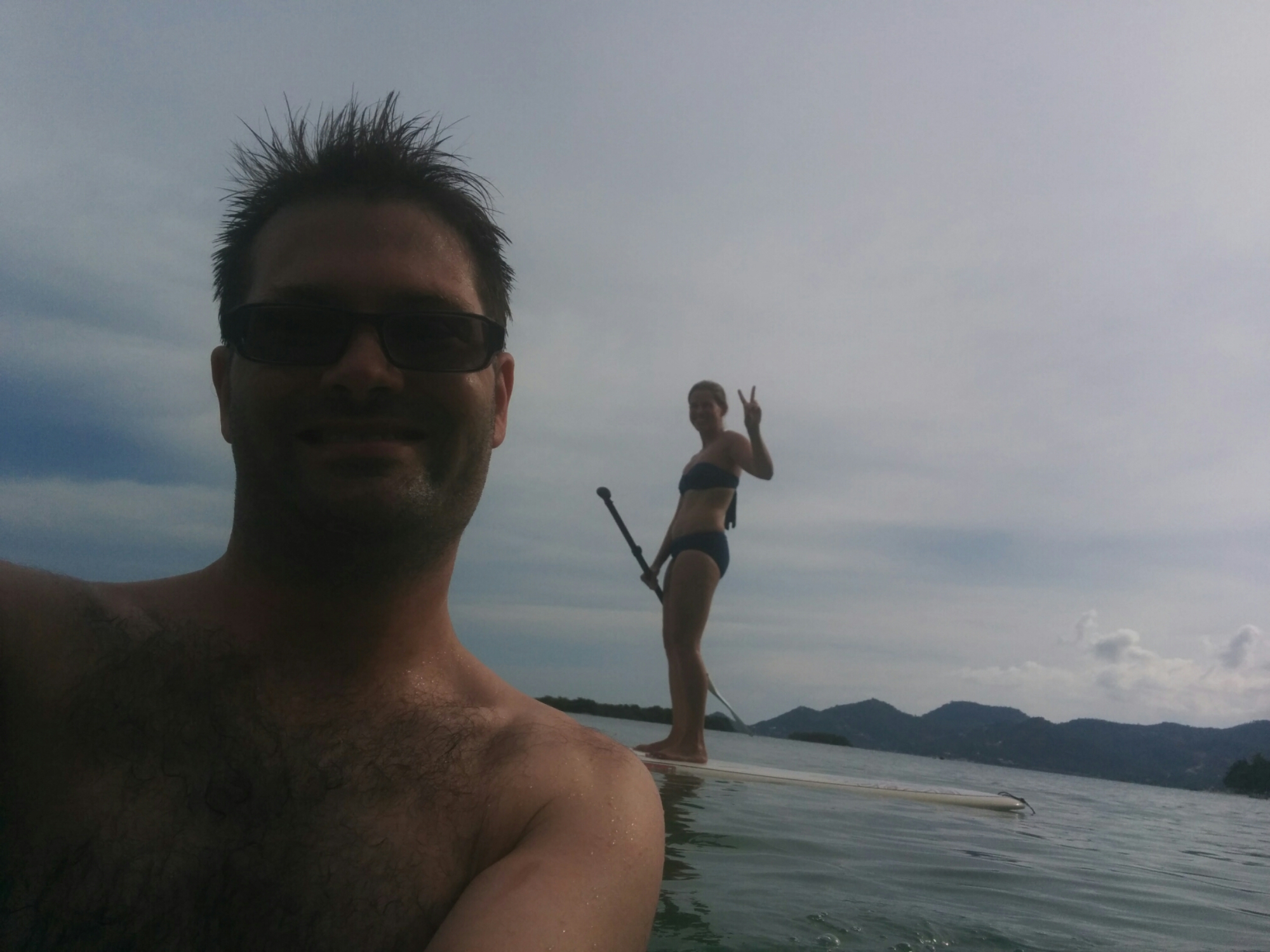
Slept under a mosquito net and through blackouts and woke up to the rooster under our bungalow. Learned a new sport (paddleboarding) and a new drink (a Ricard).

Really enjoyed our time at GreenHouse. I once heard it described as “just like a bungalow over the sea on an island, without the sea or the island.” Couldn’t agree more. But, great river views and breezes, and better French food and cappuccinos than most islands I’ve been to.

Invariably

“Ankor What? Pub Street. [Siem Reap, Cambodia] The backpackers’ favourite where you invariably end up dancing on the tables till the small hours…” — The Rough Guide to Southeast Asia on a Budget

IMG_20141009_013522 (1)

In related news, a frequent question during our trip has been, “What day is it?” Not, mind you, asking for the date, but for the day of the week.


Erin doing the macarena in the street.

IMG_20141009_013113

Some more quick thoughts on Vietnam

We are finishing up our week volunteering teaching English in the industrial zone outside of Hanoi with CVTD, and I am thankful for the greater depth of understanding of the Vietnamese way of life and culture that the experience has given me (not to mention all of the delicious food). I hope our students had as much fun as we did. Tomorrow morning we are jumping on a ($30) flight to Hoi An, to spend some time chilling on beaches and exploring the town. Here are some last quick thoughts before heading down to the central coast.

1) It is awesome to be in a place where the late-night street food includes piles of fresh Vietnamese lettuce, herbs, and vegetables (our GI tracks thank us when they have been at least briefly rinsed in potable water). The pork belly isn’t bad either. We did our best to work our way through the Old Town Restaurant Tour provided by our friends at ZINK year and agree with all of their choices.

2) After just a few days in our volunteer house, I developed callouses on my fingers from using chopsticks to stir fry peanuts, vegetables, and meats over the high heat used in Vietnamese cooking.

3) Check out this electrical wiring. The power is incredibly reliable.

Electrical wiring in Hanoi.

4) Urban chickens.

wpid-img_20140919_175041.jpg